Fieldwork 01 — Market · 6 min
Austin Grew Fast. What Happens After the Boom?
A market that expanded unusually quickly is now absorbing the consequences of that speed — while continuing to attract business.
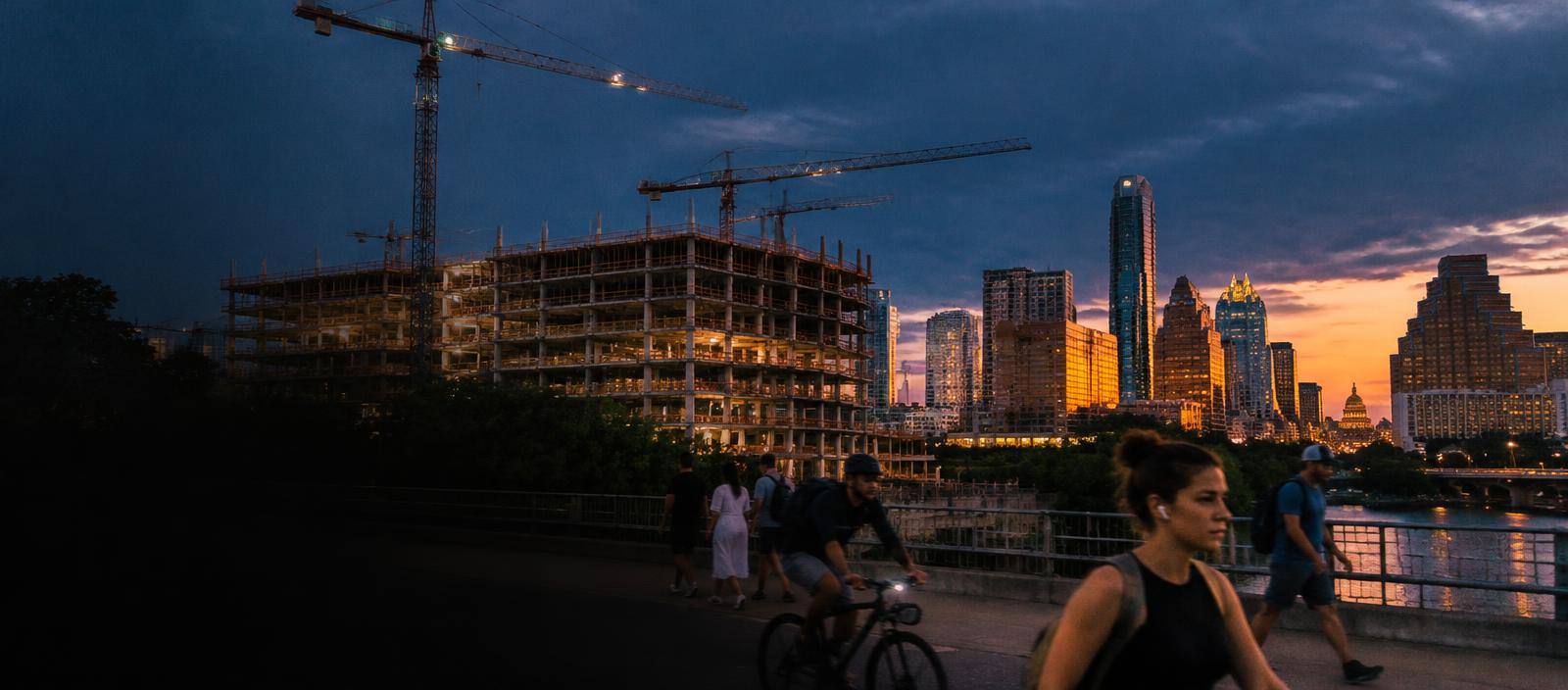
A decade of change compressed
Since 2020, Austin has moved through population growth, corporate relocations, technology investment, housing development and new patterns of work. Much of it arrived at once. The city built, hired and absorbed newcomers at a pace that would normally be spread across a much longer period.
What followed was not a single story. Corporate restructuring and technology layoffs sat alongside continued investment. Office demand shifted while new construction delivered. Housing cooled from its peak while people kept moving in. Several of those things happened in the same quarter, in the same neighborhoods, sometimes on the same street.
Directional observation, not a statistical claim. Population, housing, occupancy and employment figures change frequently and should be verified against current public sources before being quoted.
Not a failed market. A market in motion.
It is tempting to read adjustment as decline. That reading does not match what a brand representative sees on a Tuesday afternoon in a retail center in North Austin. Stores are open. Customers are asking questions. New businesses are opening in spaces that turned over twice in three years.
The more accurate description is motion. Growth and correction are both active. Both are visible at street level, and they are visible unevenly — one corridor feels saturated, another feels underserved, and a map alone will not tell you which is which.
What that means for brands
In a market this active, the shelf life of an assumption is short. A customer profile built in 2021 may describe a household that has since changed jobs, moved neighborhoods or changed how it buys.
That is the practical argument for participation. Presence in retail environments and direct conversation produce a running read on what is actually happening, rather than a snapshot of what was happening when the plan was written.
Experience creates insight. Presence creates perspective.
Get Closer to the Customer